


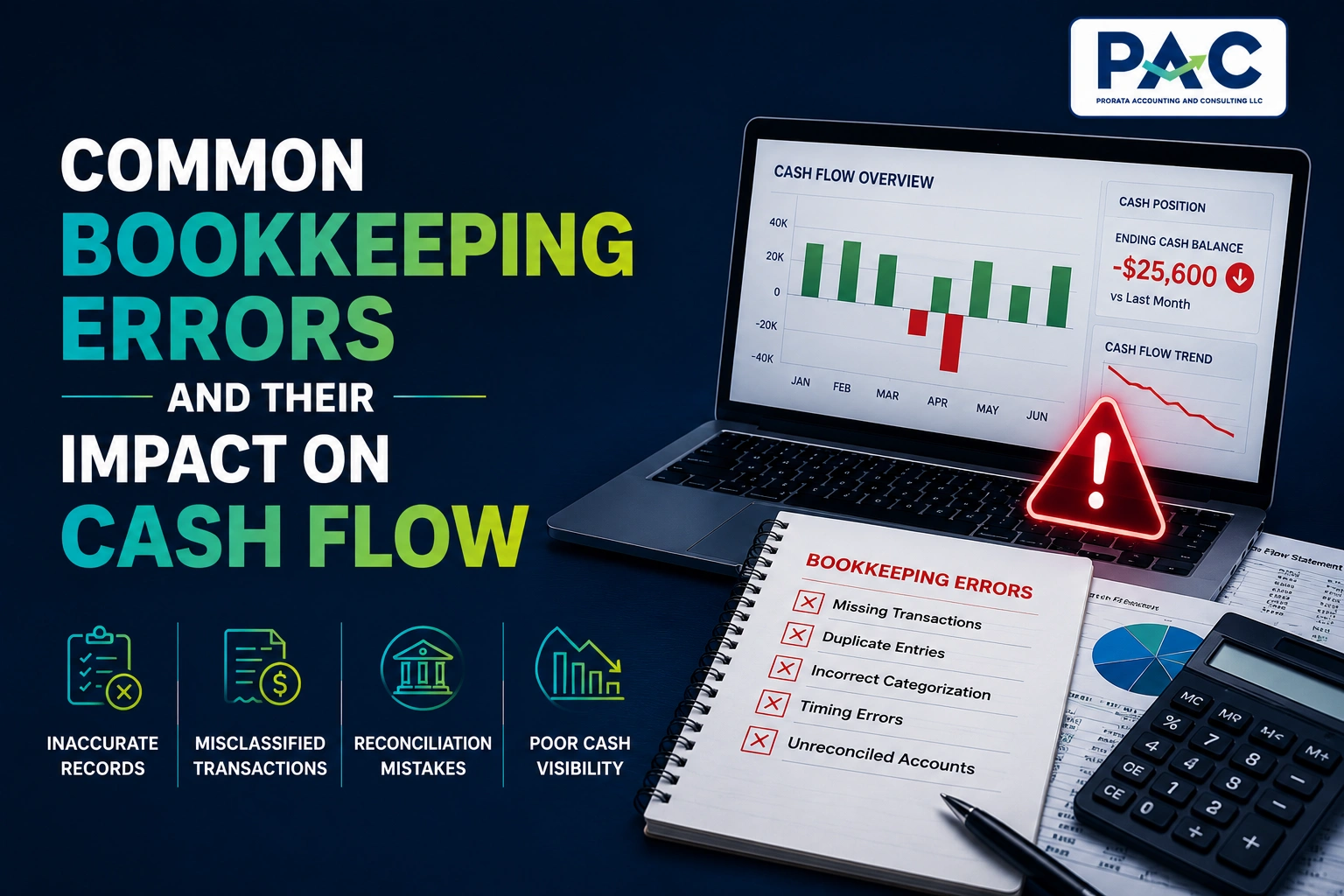
Common Bookkeeping Errors and Their Impact on Cash Flow
-
1. Mixing Personal and Business Finances
It was hard to determine the actual business performance when personal or business expenses are combined.
Common impacts include:
● Confusing financial records
● Inaccurate expense reporting
● Difficulty preparing taxes
● Limited insights into the cash on hand
Having separate accounts will make bookkeeping easier and make it more transparent for cash flow.
2. Failing to Record Transactions Promptly
When income and expenses are not recorded as they happen, they do not form a complete set of financial statements or get cash balances correct.
Possible consequences:
● Overestimating available funds
● Missing outstanding payments
● Late vendor payments
● Poor budgeting decisions
Bookkeeping on a regular basis will ensure the reports of the business will be up-to-date and not contain the previous information.
Explore our Bookkeeping Outsourcing Services
3. Ignoring Bank Reconciliations
Bank reconciliation entails a comparison of the accounting records and the bank statement to check for discrepancies.
The issues of not reconciling:
● Duplicate transactions
● Missing deposits
● Undetected bank errors
● A failure to accurately count the money in the safe
Counting money in the safe incorrectly. Some financial statements need to be reconciled regularly and can alert businesses to problems that may impact daily operations or their financial planning objectives.
4. Poor Invoice and Accounts Receivable Management
Delays in when invoices are sent and their regularity reduce the flow of cash.Delay or irregular invoicing delays the money coming in and will directly affect cash flow.
Common issues include:
● Delayed customer payments
● Higher outstanding balances
● Reduced working capital
● Increased collection challenges
The uniformity of invoices and follow-up proceedings enhances cash availability and has an impact on adjusting business procedures.
5. Misclassifying Expenses
Transactions can be categorized incorrectly, resulting in an incorrect financial statement and budgeting errors.
Potential effects include:
● Misleading profit reports
● Incorrect tax deductions
● Poor spending analysis
● Ineffective financial planning
Expense categorization is an essential part of proper accounting that gives accurate information to make a good business decision.
6. Neglecting Regular Financial Reviews
The job of bookkeeping is not just data entry work! Financial records need to be examined regularly, within the norm, to recognize trends and any potential problems.
The advantages of regular audits:
● Early indications of cash shortage situations
● Better expense control
● Improved forecasting
● Business decisions based on greater information
Regular tracking provides a chance for businesses to resolve financial pressures in a timely fashion, before the issues start to create big problems.
Bookkeeping Errors Affect Cash Flow Adversely!
Although bookkeeping errors can seem insignificant, they can have a significant effect on cash flow. Financial visibility is often lost, and cash shortages are caused by mixing finances, putting transactions to bed at the last minute, failure to reconcile and mismanaging invoices. By keeping records organized, making frequent reviews of financial information and having standard bookkeeping procedures, businesses are able to improve their cash flow, make better decisions, and ensure their continued success.
Also Read : Managing Third-Party Vendor Risk: What Your Due Diligence Is Missing