


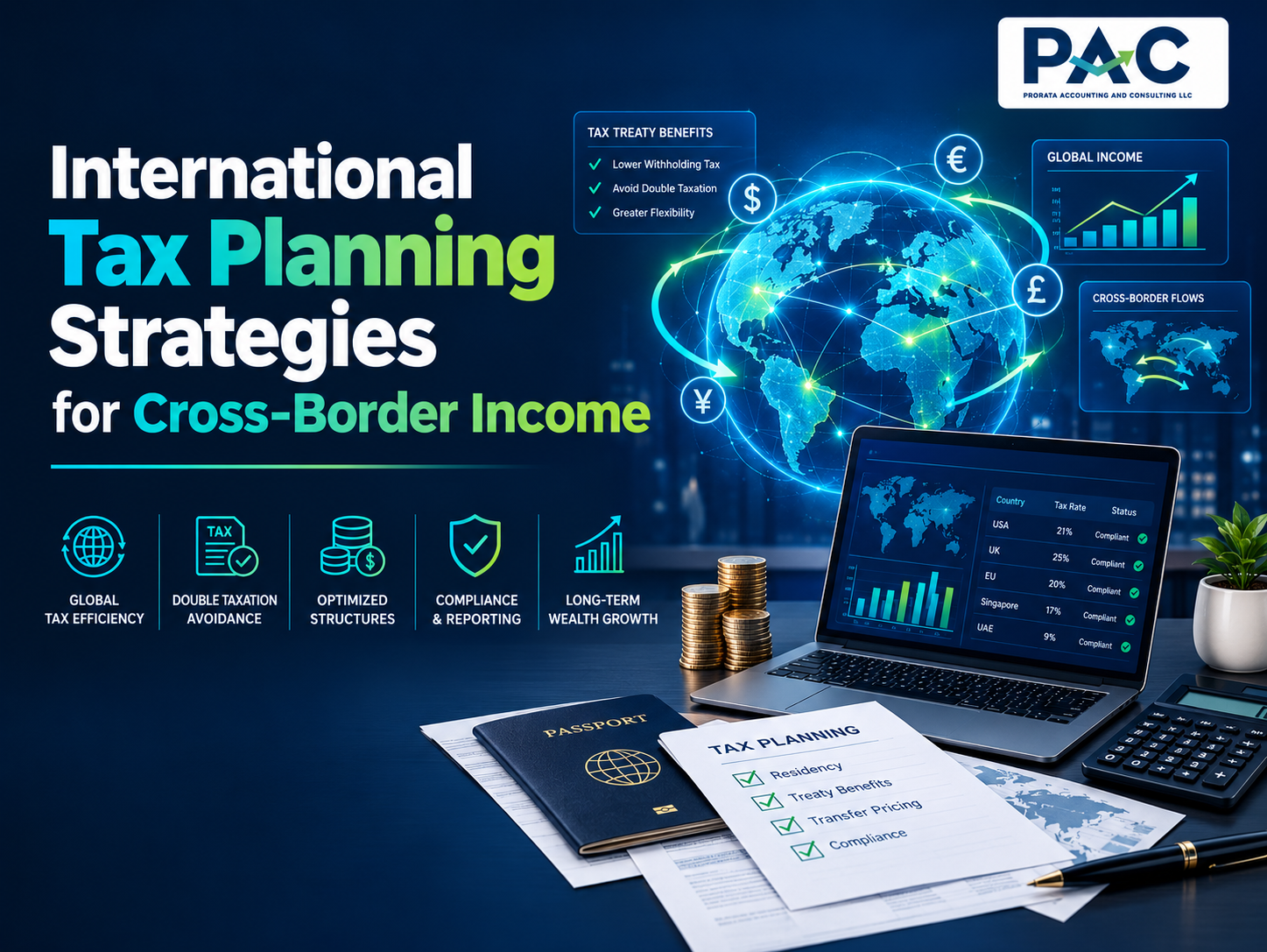
International Tax Planning Strategies for Cross-Border Income
-
To understand tax residency rules
Verify your tax residency status carefully before becoming a “foreign earner”.
Key considerations include:
● Determine the country of tax domicile of the organization.
● Check what physical presence policies are for your company.
● Know the concept of ‘domicile' and ‘residence'.
● To evaluate income reporting requirements globally.
● Keep track of patterns of change following migration.
● Tax planning is an effective way to avoid unforeseen tax issues.
To avail of the maximum benefit under DTA
Double taxation agreements (DTAs) are agreements entered into by two countries to prevent taxpayers' income from being taxed twice.
Benefits include:
● The withholding tax rates are lower.
● Eligibility for tax credit Countries.
● Selected income types, exemptions.
● Specific responsibility for taxing.
● Greater certainty in the course of international transactions.
Consistent with the rationale outlined above, treaty benefits will enhance international tax planning tactics.
Pick the one that's perfect for you
The way a business is organized is significant for efficient international tax planning.
Consider the following:
● Subsidiary/ Branch operations.
● Holding company advantages.
● Tax rates are set at local (city/county) levels.
● Regulatory compliance requirements.
● Operational substance requirements.
The right organizational framework is in place to facilitate long-term global growth.
New Transfer Pricing Policy (Development)
Policies practiced by businesses in different countries should be compliant.
Best practices include:
● Follow the “arm's length” principle.
● Maintain accurate documentation.
● Regularly review intercompany transactions.
● In line with OECD principles of pricing.
● Be ready for possible IRS inspections.
Good documentation minimizes the risks for compliance.
Minimize the withholding tax liability
The across-border payments typically result in the imposition of a withholding tax.
Planning opportunities include:
● Claim treaty-based reductions.
● Structure payments efficiently.
● Complete required documentation.
● Discuss the various ways that dividends are distributed.
● Optimize payments of royalties and interests.
Effective planning helps to maintain important cash flow.
Keep a close watch on potential risks for a PE
Business presence may occur as a result of international activity without being intended or planned. Business presence can arise inadvertently when carrying out international activities.
Assess if your business:
● Employs staff overseas.
● Maintains foreign offices.
● Signs contracts internationally.
● Performs long-term projects in other countries.
● Uses indirect (dependent) agents or a channel of distribution.
Periodic checks reduce any unanticipated corporate tax liability.
Stay Compliant With International Reporting
In terms of global tax transparency, maintain compliance by:
● Properly reporting foreign income.
● Declaring overseas assets.
● Meeting deadlines in filing returns.
● Keeping complete financial records.
● Monitoring regulatory updates.
Compliance minimizes penalties and enhances a business's credibility.
Work With International Tax Professionals
This is the point where professional advice can come in handy and make complex cross-border taxation easy, Breeze Holiday notwithstanding.
The following tips from experienced advisors could be useful:
● Evaluate residency status.
● Design tax systems and practices that are efficient and equitable on a worldwide scale.
● Properly implement treaty benefits.
● Manage reporting obligations.
● Recognize tax-planning strategies.
There's professional support to bolster international tax planning so that you make the right decision.
Go for International Tax Planning for Cross-Border Income
International tax planning is a carefully planned, ongoing, and strategic activity that must be done carefully in order to be successful. A thorough grasp of the residency requirements, the effective use of tax treaties, the choice of the appropriate business vehicle, and accurate reporting all play a part in the efficient tax management of cross-border situations.
