


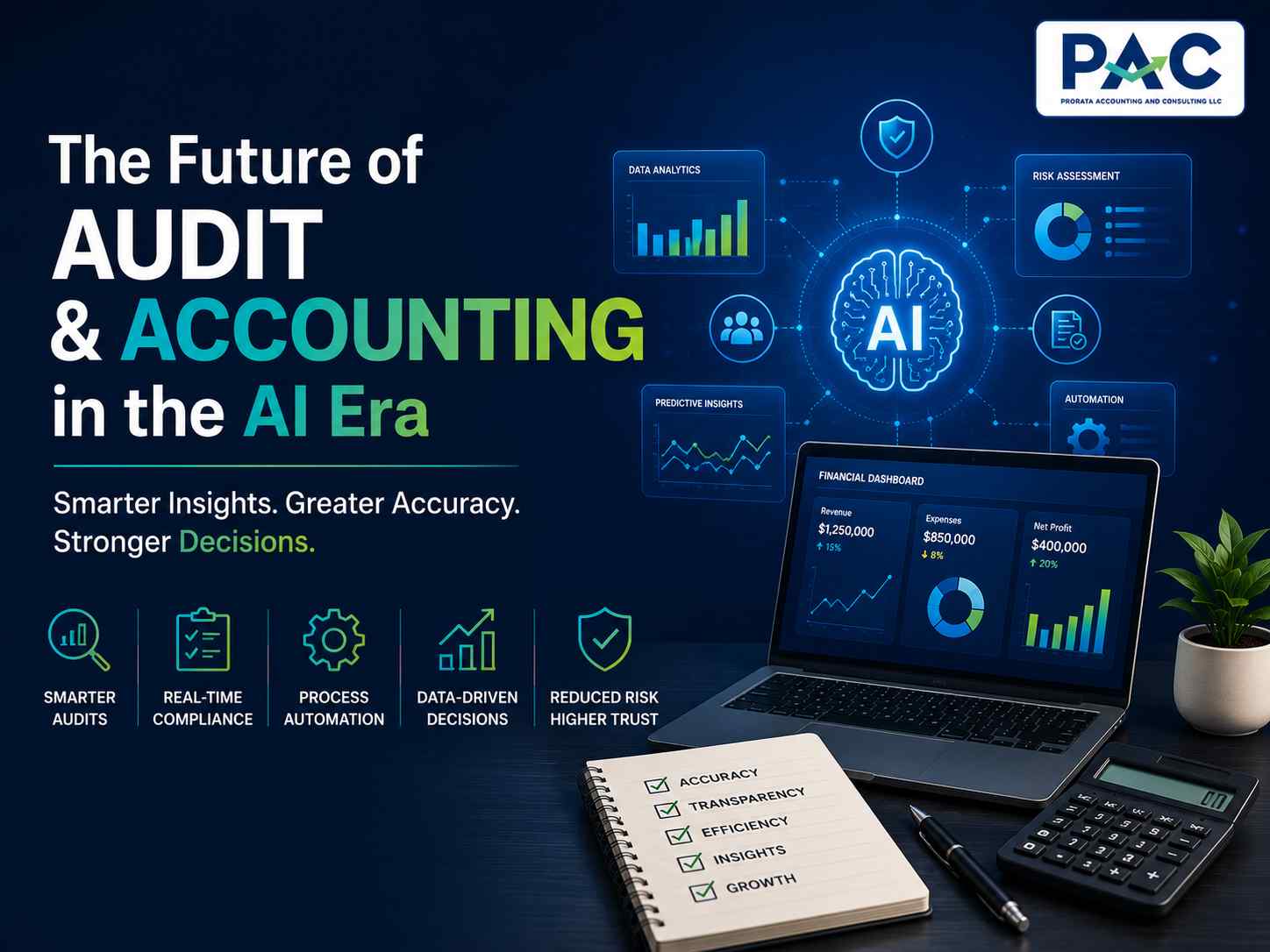
The Future of Audit and Accounting in the AI Era
-
For all its history, the world of audit and accounting is in a radical transformation facilitated and fueled by artificial intelligence. AI can streamline tedious tasks, enhance financial analysis, and fulfil various other audit tasks, making it an invaluable ally for auditors. But it's not about displacing accountants and auditors; the future is about adding more value to them. Its emphasis is not on using smart technology; instead, it is about leveraging intelligent technology along with professional skills.
With a focus on nurturing professionals and adopting AI in the right way, companies that see promise in the opportunities posed by this transformative technology will be more ready for future success.
Usage of AI Throughout the Industry
AI has become an active and established technology! India is no different either, and is also becoming a strategic priority for audit and accounting firms across the globe. AI is being used in organizations to boost operational efficiency, cut down manual tasks, and, with its help, achieve better financial reporting.
Adopting AI is assisting companies as they:
● Accomplish repetitive accounting activities.
● Process a great amount of financial information in a short time.
● Identify fraudulent transactions more quickly and market functions more effectively.
● Increase the reproducibility and correctness of the audits.
● Allow quicker business decision-making.
AI Enhances Audit Quality
AI's can digest vast amounts of financial data within seconds, which is the biggest asset that they have. It makes it possible for auditors to detect patterns and exceptions, as well as potential problems, much sooner than normal methods can.
By promoting audit quality, AI helps to:
● Detect inconsistencies in accounting information.
● Enhance fraud detection ability.
● Minimize loss of time caused by calculation mistakes.
● Improve risk assessments.
● Provide evidence to back up audit findings.
Human Judgement Will Still Play an Important Role
Despite the advancements of technology, AI cannot replace human skills. The auditors are responsible for checking AI-generated findings before drafting their final report. The human element will still play a key role in interpreting financial information and determining complex situations in business.
Human oversight aids by:
● Applying professional scepticism.
● Validating AI-generated recommendations.
● Taking the context of the business into account.
● Taking ethical financial decisions.
● Strengthening the public confidence in the audit.
A Statement of Trust and Transparency Matters More than Ever!
Transparency and accountability are essential to success in using artificial intelligence. AI systems that provide explanations as to how conclusions are drawn are necessary. Transparency of governance enhances regulators, clients, and stakeholders' confidence.
The organizations need to concentrate on:
● Explainable AI models.
● Transparent decision-making processes.
● Reliable financial reporting.
● Consistent regulatory compliance.
● Gaining buy-in to AI governance frameworks.
Security and Ethics Are Never Neglected
In addition to the financial implications, safeguarding sensitive data is a crucial challenge with the increasing use of AI in finance. Beyond the financial impacts, data privacy is a key concern as AI continues to be a vital component of financial systems. Even though some pose limitations to AI, many organizations make it a priority to implement better security measures.
Responsible AI requires:
● Strong cybersecurity measures.
● Enhanced role of privacy in safeguarding financial credentials.
● Diminishing algorithmic bias.
● Experts' view on ethically implementing AI.
● Recommendations for ethically implementing AI.
● Continuous monitoring of AI systems.
Global AI Standards will Encourage Development
Many challenges are faced by multinational organizations due to different regulations in different countries. AI standards harmonized around the world would ease compliance and yield uniformity across jurisdictions, many audit professionals believe.
Global standards can offer:
● Consistent regulatory expectations.
● Easier international collaboration.
● Better compliance management.
● Lower operational uncertainty.
● The ability to trust the use of AI tools more
Upskilling the Workforce is a Priority
It is not technology that's going to transform the profession. To operate confidently with AI tools, staff must continually be educated. Organizations that will make learning investments for its workforce will have a competitive edge.
Future-ready professionals need:
● Data analysis expertise
● Knowledge of and skills in using AI and technology
● Critical thinking abilities
● Ethical decision-making skills
● Continuous professional development
The role of an Auditor will also evolve
AI cuts down on repetitive administrative tasks. With a growing level of automation, auditors can start concentrating on becoming more of an advisor, a go-to person for strategic advice, and actively engaging with clients.
The future audit task list comprises:
● Providing strategic business intelligence
● Improving client collaboration
● Enhancing risk management
● Supporting financial forecasting
● Offering higher value advisory services
Audit and Accounting in the AI Era!
With the power of AI, audits and accounting will be required to be conducted in a more strategic way. While AI will enhance speed, precision, and capacity for insight, it will still require a human role in terms of professional judgment, ethics, fairness, and reliability.
Also Read : AI Use Policy Essentials: A Compliance Framework That Works